


Here's the stat that reframed how I think about AI systems: a study of 1,642 multi-agent execution traces across seven open-source frameworks found failure rates between 41% and 87%.
The primary cause wasn't model quality. It wasn't infrastructure. It wasn't bugs. Specification and coordination breakdowns accounted for 79% of failures — agents that were individually capable but collectively incoherent, because nobody designed how they'd work together.
I see this constantly in the B2B companies we work with. They build a capable AI agent. It works in demo. They add a second agent. Then a third. Suddenly, the system that worked perfectly as a solo performer falls apart — not because any individual piece is broken, but because nobody defined the handoffs between them.
Multi-agent AI market value (2025)
Projected market value by 2030
Of failures caused by coordination, not capability
The multi-agent AI market is valued at $7.84 billion in 2025 and projected to hit $52.62 billion by 2030. Gartner predicts 40% of enterprise apps will feature task-specific AI agents by the end of 2026 — up from under 5% in 2025. This isn't a niche technology anymore. And the skill that determines whether these systems work in production is the same one that determines whether any team of specialists works: the ability to decompose complex work and design clear delegation.
The "Super Agent" Fallacy
The most common mistake I see teams make is trying to build one agent that does everything. It's the AI equivalent of the startup founder who refuses to hire — they want a single system that handles research, analysis, writing, fact-checking, formatting, and distribution, all within one massive context window.
It doesn't work. And the reason is the same as why the single-founder approach doesn't work: complexity breaks individuals, whether they're human or artificial. A single agent juggling research, analysis, writing, and quality control in one context window is a single point of failure that degrades at every step — each additional responsibility competes for the same finite attention.
Of enterprises have AI agent pilots
Have successfully scaled to org-wide use
78% of enterprises now have AI agent pilots, but only 14% have successfully scaled an agent to organization-wide operational use. The gap isn't technical capability — it's system design. The teams that succeed are the ones that treat multi-agent orchestration like organizational design: specialized roles, clear boundaries, explicit handoff protocols, and accountability at every step.
You're not going to lose your job to an AI, but you're going to lose your job to someone who uses AI.
What he didn't say — but what the data shows — is that "someone who uses AI" increasingly means someone who can orchestrate teams of agents, not just operate a single one.
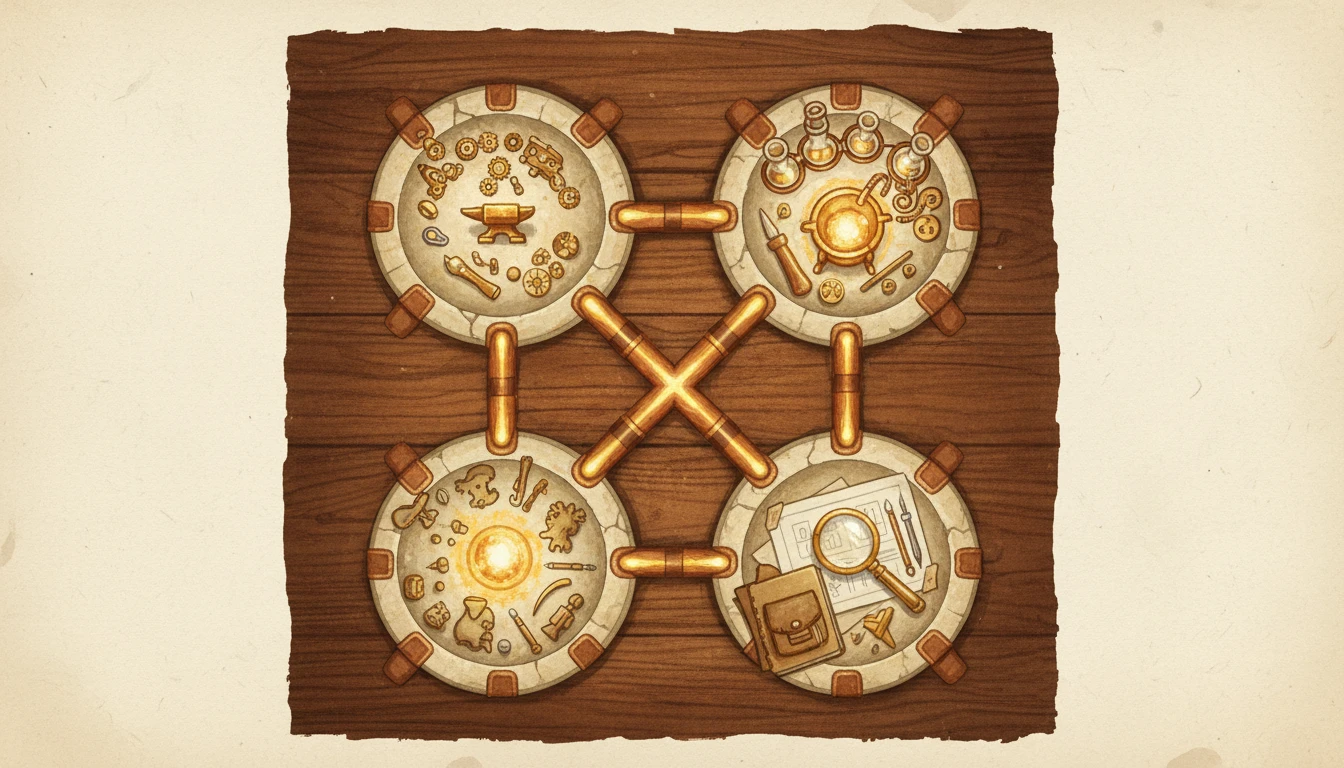
This skill has a direct analog in how good managers build teams. The language is different. The mental model is the same.
1. Work Stream Decomposition
Breaking a large objective into discrete units, each with clear inputs, outputs, and success criteria. Each unit must be independently completable by a single agent without requiring awareness of the full system.
Here's what this looks like in practice. A client asked us to build an AI-powered competitive analysis pipeline. The instinct was to build one agent that does everything. Instead, we decomposed it into four specialized agents: one for data collection (web scraping, API calls, document parsing), one for synthesis (pattern recognition across the collected data), one for writing (turning analysis into structured narrative), and one for fact-checking (verifying claims against source material). Each agent has a single job and does it reliably.
Spawn feature leads that spawn their own specialists — 3x deeper decomposition without exploding anyone's context window.
It's hierarchical delegation, not flat coordination — the same structure that scales in human organizations.
2. Scope Sizing
Knowing when a task is too large for a single agent or too small to justify the orchestration overhead. Context windows have limits. A single agent trying to hold an entire project in context will start dropping instructions, forgetting constraints, and degrading in quality — the same context degradation pattern we covered in Article 3.
The rule of thumb we use: if a task requires more than 3-4 distinct cognitive steps, or if the context exceeds what you could hold in a single clear brief, it needs decomposition. If a task is a single well-defined operation, adding an orchestration layer just adds latency and failure surface.
3. Guardrail Definition
Specifying what each agent cannot do. Without boundaries, agents drift. The data collection agent starts making editorial judgments. The writing agent starts inventing data points. The synthesis agent starts fact-checking (poorly) instead of leaving that to the dedicated fact-checker. Guardrails prevent scope creep between agent boundaries — the same principle as RACI matrices in project management.
4. Handoff Protocol Design
The connective tissue that makes the whole system work. What information flows between agents? In what format? At what trigger points? What happens when an agent fails or produces output that doesn't meet the next agent's input requirements?
This is where MCP (Model Context Protocol) has become critical. Developed by Anthropic and now governed by the Linux Foundation with backing from OpenAI, Google, and Microsoft, MCP standardizes how agents access tools and exchange context. With over 6,400 registered servers and 97 million monthly SDK downloads, it's become the shared infrastructure that makes handoff protocols reproducible across tools and vendors.
If you already do this, the gap is shorter than you think.
| What you do now | The AI skill it maps to |
|---|---|
| Decompose large projects into work streams with clear owners, dependencies, and milestones | Work Stream Decomposition — the same discipline, applied to agent roles instead of human roles |
| Know when to hire a specialist versus when to handle something yourself | Scope Sizing — judging when orchestration overhead is worth the capability gain |
| Define RACI matrices that prevent teams from stepping on each other's work | Guardrail Definition — setting boundaries that keep specialized agents within their lanes |
| Design workflow handoffs with clear documentation, quality gates, and escalation paths | Handoff Protocol Design — building the connective tissue between agent roles |

A quick self-diagnostic.
You have this skill if you...
- Instinctively break complex requests into distinct phases before assigning them — and each phase has a clear deliverable, not just an activity
- Design workflows where the handoff between steps is as well-defined as the steps themselves
- Know when adding another person (or agent) to a task will speed it up versus slow it down
- Think about agent systems the way you think about team structures — specialized roles, clear accountability, explicit communication protocols
You need to build this skill if you...
- Default to building single "do everything" agents that work in demo but fail at production complexity
- Haven't defined what information flows between agents, in what format, or what happens when a handoff fails
- Add agents to a system without analyzing whether the orchestration overhead is worth the capability gain
- Treat multi-agent coordination as a technical problem (APIs and infrastructure) rather than a design problem (roles, boundaries, and accountability)
What Comes Next
This is the fifth of seven skills we've identified that predict AI success in 2026. Task Decomposition and Delegation is the orchestration layer — the skill that turns individual AI capabilities into functioning systems.
You can specify precisely, evaluate rigorously, diagnose failures, and manage costs. Now you can design systems where multiple agents coordinate without human babysitting. The next question is about the boundaries those agents operate within: what should an AI agent be allowed to access, and what should it never touch?
That's Skill 6: Trust and Security Design →
Published by Just Badge — an operator-led growth studio for founder-led B2B companies. We build AI systems, research-backed authority, and the growth infrastructure that compounds.